
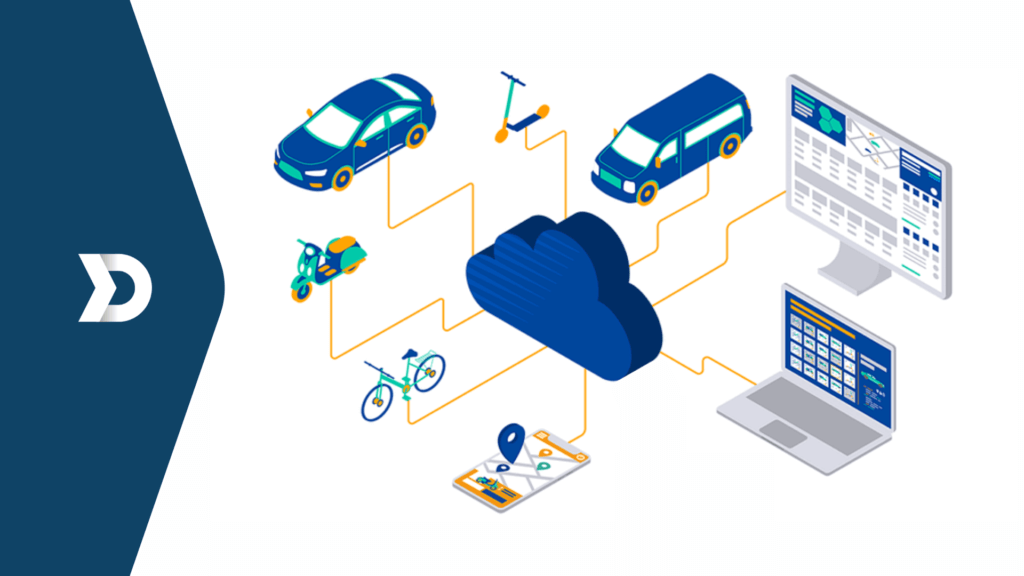
Telematics is the technology that combines telecommunications and informatics to remotely collect, transmit, and analyze data from vehicles and mobile assets. It uses GPS, onboard sensors, and wireless networks to turn driving behavior into structured data — enabling usage-based insurance, fleet management, driver safety coaching, and connected mobility applications.
Table of Contents
What Is Telematics? Definition
Telematics is the integration of telecommunications and informatics — the science of sending, receiving, and storing information related to remote objects (like vehicles) via telecommunication devices. The word itself combines “tele” (remote) and “matics” (from informatics). In practice, a telematics system collects data from sensors installed in or connected to a vehicle, transmits that data over wireless networks to a cloud server, and processes it into actionable intelligence such as driving scores, trip logs, and risk assessments.
While the concept originated in the 1970s as a general term for computer-networked communications, telematics today almost exclusively refers to vehicle telematics — technology that monitors how vehicles move and how drivers behave. The global vehicle telematics market reached $75 billion in 2025 and continues to grow as insurers, fleet operators, automakers, and app developers embed telematics into their products.
How Telematics Works
Every telematics system follows a four-stage pipeline: sense, transmit, process, and act.
1. Data Collection (Sense)
A telematics device — whether hardware or a smartphone app — continuously samples data from onboard sensors:
- GPS receiver: Records latitude, longitude, altitude, speed, and heading at intervals as frequent as 1 Hz (once per second)
- Accelerometer: Measures acceleration forces in three axes (longitudinal, lateral, vertical) to detect braking, cornering, and impacts
- Gyroscope: Tracks rotational movement for precise turn detection and phone orientation calibration
- Magnetometer: Provides compass heading independent of GPS, useful in urban canyons
- OBD-II / CAN-bus interface: Reads engine RPM, fuel consumption, diagnostic trouble codes (DTCs), odometer, and vehicle speed directly from the vehicle’s computer (hardware devices only)
In smartphone-based systems, the phone’s built-in sensors replace dedicated hardware. Modern smartphones contain the same accelerometers, gyroscopes, GPS chips, and magnetometers found in commercial-grade telematics units — and advanced sensor fusion algorithms compensate for phone placement variability.
2. Data Transmission (Transmit)
Collected data is packaged and sent to cloud servers via cellular networks (4G LTE or 5G), Wi-Fi, or satellite links. Hardware devices typically have embedded SIM cards for always-on connectivity. Smartphone solutions transmit over the phone’s existing data connection.
Modern systems batch sensor readings during a trip and upload complete trip packets upon trip-end, with critical events (crashes, geofence breaches) streamed in near-real-time for immediate alerting.
3. Data Processing (Process)
Cloud-based analytics engines transform raw sensor streams into meaningful outputs:
- Trip reconstruction: GPS points become routes with start/end locations, duration, and distance
- Event detection: Machine learning identifies harsh braking, rapid acceleration, sharp cornering, speeding, and phone distraction events
- Scoring algorithms: Per-trip and cumulative safety scores quantify driving quality on standardized scales
- Pattern recognition: Long-term analysis reveals habitual behaviors, peak risk times, and fatigue indicators
- Crash detection: High-g impact signatures combined with post-impact vehicle motion confirm real collisions vs. false positives (potholes, speed bumps)
Platforms like Damoov’s Telematics API handle this entire pipeline — from raw sensor ingestion to standardized scored output — via REST endpoints that any application can consume.
4. Action (Act)
Processed data drives decisions: a fleet dispatcher re-routes a vehicle, an insurer adjusts a premium, a driver receives a coaching notification, or an emergency responder is dispatched to a crash location. The value of telematics lies not in collection alone, but in closing the loop between data and action.
Types of Telematics Systems
Telematics solutions fall into three main categories based on their data collection hardware:
| Feature | OBD-II / Hardware Dongle | Smartphone-Based | Embedded (OEM) |
|---|---|---|---|
| Installation | Plug into vehicle OBD port | App install only — no hardware | Factory-installed by manufacturer |
| Hardware cost | $50–$200 per device | $0 (uses existing phone) | Included in vehicle price |
| Data sources | GPS + accelerometer + OBD engine data | GPS + accelerometer + gyroscope + magnetometer | All vehicle sensors + GPS + connectivity module |
| Engine diagnostics | Yes (DTCs, fuel, RPM) | No (driving behavior only) | Full vehicle health telemetry |
| Deployment speed | Days–weeks (shipping + install) | Minutes (app download) | Pre-installed at purchase |
| Scalability | Limited by logistics | Unlimited — scales with app installs | Limited to supported OEM models |
| Accuracy | High (fixed mount, direct vehicle data) | High (sensor fusion compensates for placement) | Highest (direct CAN-bus access) |
| Best for | Small–medium fleets needing engine data | Insurance, large-scale programs, consumer apps | Connected vehicle services, OEM partnerships |
OBD-II / Hardware Dongles
Traditional telematics devices plug into a vehicle’s OBD-II port (standardized on all cars manufactured after 1996 in the US, 2001 in the EU). They combine GPS tracking with direct access to the vehicle’s engine computer — reading fuel consumption, RPM, diagnostic fault codes, and mileage. Hardware dongles are ideal for fleets that need vehicle health monitoring alongside location tracking, but they introduce logistics complexity: devices must be shipped, installed, and maintained across the entire vehicle population.
Smartphone-Based Telematics
Smartphone telematics uses the sensors already built into modern phones — accelerometers, gyroscopes, GPS, and magnetometers — to detect and score driving behavior without any additional hardware. A telematics SDK embedded in a mobile app handles trip detection, sensor data collection, and cloud upload in the background. This approach eliminates hardware costs and installation logistics, making it possible to deploy telematics programs to millions of users within days rather than months.
The tradeoff: smartphone systems cannot read engine diagnostics (no OBD access). However, for scoring driving behavior, detecting crashes, and tracking trips — which represent 80%+ of telematics use cases — smartphone sensor accuracy matches or exceeds dedicated hardware thanks to advanced calibration and sensor fusion algorithms.
Embedded OEM Telematics
Factory-installed telematics modules (TCUs — Telematics Control Units) come pre-integrated into vehicles from manufacturers like GM (OnStar), BMW (ConnectedDrive), Tesla, and others. These systems have the deepest data access — reading directly from the vehicle’s CAN bus, accessing ADAS events, tire pressure, battery state, and more. The limitation is ecosystem lock-in: data is controlled by the OEM, and coverage only extends to specific vehicle makes and model years.
What Data Does Telematics Collect?
The specific data points collected depend on the system type, but core telematics data includes:
Location and Movement
- GPS coordinates (latitude, longitude, altitude)
- Speed (instantaneous and average)
- Heading and direction of travel
- Distance traveled per trip and cumulative
- Trip start/end timestamps and locations
- Route taken (polyline of GPS points)
Driving Behavior Events
- Hard braking (deceleration exceeding threshold, typically >0.4g)
- Rapid acceleration (>0.3g sustained)
- Sharp cornering (lateral force >0.3g)
- Speeding (speed vs. posted limit or road-type threshold)
- Phone distraction (screen interaction while in motion)
- Tailgating (following distance estimation via sensors)
Vehicle Diagnostics (Hardware/OEM Only)
- Engine RPM and load
- Fuel level and consumption rate
- Diagnostic trouble codes (DTCs) and malfunction indicators
- Battery voltage
- Coolant temperature
- Odometer reading
- Tire pressure (TPMS-equipped vehicles)
Derived Analytics
- Safety score (composite of all behavior events)
- Eco-driving score (fuel efficiency of driving style)
- Risk assessment (actuarial-grade risk tier)
- Mileage classification (urban vs. highway vs. rural)
- Time-of-day driving patterns
- Road type distribution
Uses of Telematics
Fleet Management
Fleet telematics gives operators real-time visibility into vehicle location, driver behavior, fuel usage, and maintenance needs. Dispatchers optimize routes dynamically, reduce idle time, enforce safety policies, and ensure regulatory compliance (ELD mandates, hours-of-service tracking, EU tachograph requirements). The global fleet telematics market exceeds $50 billion in 2026, driven by regulatory mandates and pressure to reduce operating costs.
For businesses that want fleet visibility without hardware investment, ZenRoad offers smartphone-based fleet tracking — drivers install an app and the platform handles trip detection, scoring, and reporting automatically.
Usage-Based Insurance (UBI)
Usage-based insurance uses telematics data to price policies based on actual driving behavior rather than demographic proxies like age, gender, or ZIP code. Programs include:
- Pay-How-You-Drive (PHYD): Premiums adjusted by driving quality — braking smoothness, speed compliance, cornering, phone distraction
- Pay-As-You-Drive (PAYD): Premiums based on miles driven — less driving means lower premiums
- Manage-How-You-Drive (MHYD): Combines scoring with active coaching — insurers reward improvement over time
Major carriers — Progressive, Allstate, Farmers, Root, and dozens more — now run fully app-based UBI programs. Damoov’s Telematics SDK powers insurance programs in 50+ countries, embedding driving scores, crash detection, and distraction monitoring directly into carrier apps without hardware. Learn more about how telematics insurance works.
Driver Safety and Coaching
Telematics-based coaching scores each trip on risk factors — speeding, harsh braking, rapid acceleration, sharp cornering, phone distraction — then delivers personalized feedback. Research shows drivers who receive consistent telematics feedback reduce risky behaviors by 20–40% within 90 days. Fleet safety programs use coaching to reduce accidents, lower insurance costs, and protect drivers.
Crash Detection and Claims Automation
Advanced telematics systems detect collisions in real time using high-g impact signatures combined with post-impact motion analysis. When a crash is confirmed, the system can automatically initiate first notice of loss (FNOL), dispatch emergency services, and preserve trip data as evidence for claims processing. This reduces claims cycle time from weeks to hours.
Connected Car Services
Automakers and mobility platforms use telematics to power features like remote diagnostics, predictive maintenance alerts, stolen vehicle recovery, roadside assistance, and over-the-air updates. Car-sharing and rental platforms use telematics to track vehicle utilization, enforce geofences, and bill by the minute or mile.
Remote Vehicle Diagnostics
OBD-connected telematics reads engine fault codes (DTCs), monitors battery health, tracks maintenance schedules, and alerts fleet managers to developing issues before they cause breakdowns. This shifts maintenance from reactive repair to predictive prevention — catching issues early to avoid costly roadside failures and unplanned downtime.
Benefits of Telematics
Lower Insurance Costs
Safe drivers reduce premiums by 15–30% through telematics-verified behavior. The data replaces actuarial guesswork with evidence — good drivers stop subsidizing risky ones. Several US states now mandate that insurers offer UBI options, making telematics data a direct path to safe driver discounts.
Reduced Fuel Consumption
Fleet telematics identifies excessive idling, aggressive acceleration, and inefficient routing — the three biggest fuel drains. Companies acting on telematics insights typically achieve 10–15% fuel savings within the first year, with eco-driving coaching programs compounding savings over time.
Improved Driver Safety
Real-time feedback and post-trip scoring make risky habits visible and measurable. Fleets using telematics-based coaching report 20–40% reductions in harsh events and 25–30% fewer at-fault accidents within the first year of deployment.
Theft Prevention and Recovery
GPS tracking enables real-time geofencing and movement alerts. If a vehicle leaves a designated zone or moves outside operating hours, the system triggers instant notifications. Recovery rates for telematics-equipped vehicles are significantly higher than untracked vehicles, and some insurers offer premium discounts for GPS-tracked assets.
Regulatory Compliance
Telematics automates compliance with electronic logging device (ELD) mandates, hours-of-service (HOS) tracking, DVIR (driver vehicle inspection reports), and EU tachograph requirements. This eliminates manual paperwork, reduces violation risk, and provides audit-ready records.
Predictive Maintenance
Correlating mileage, engine diagnostics, and driving patterns predicts when components will likely fail. Predictive maintenance reduces unplanned downtime by up to 50% and extends vehicle lifespan — particularly valuable for fleets where a single breakdown cascades into missed deliveries and penalty costs.
Operational Efficiency
Route optimization, idle reduction, and driver accountability combine to reduce total fleet operating costs by 15–25%. Telematics data enables evidence-based decision-making: which vehicles to replace, which routes to adjust, which drivers need coaching, and where to allocate resources.
Smartphone Telematics: The Modern Approach
The most significant shift in telematics is the move from dedicated hardware to smartphone-based solutions. Modern phones contain the same core sensors as traditional telematics devices, and sensor fusion algorithms now match or exceed hardware accuracy for driving behavior measurement.
Why Smartphone Telematics Is Growing
- Zero hardware cost: No devices to purchase, ship, or install — programs scale with app downloads
- Instant deployment: A telematics program launches the moment a user downloads the app, vs. weeks of hardware logistics
- Universal compatibility: Works with any vehicle (no OBD port compatibility issues, no year/make restrictions)
- Continuous improvement: Algorithms update via the cloud without touching physical devices
- User engagement: The same app that collects data can deliver coaching, scores, and rewards — creating a feedback loop
How It Works Technically
A telematics SDK integrates into any iOS or Android app. Once embedded, it runs in the background and automatically:
- Detects trip start using motion classifiers (distinguishes driving from walking, cycling, transit)
- Records sensor data — accelerometer, gyroscope, GPS, magnetometer — at high frequency throughout the trip
- Detects trip end when the vehicle stops and the phone’s motion pattern changes
- Uploads trip data to cloud processing where ML models produce scores, events, and analytics
- Returns structured results via API — safety score, eco score, trip details, detected events
Damoov’s platform is built entirely on this model. The Telematics API processes smartphone sensor data into standardized driving scores, risk metrics, and trip analytics — powering insurance, fleet, and mobility applications across 195 countries without requiring aftermarket hardware.
How to Choose a Telematics Solution
The right telematics approach depends on your use case, scale, and technical requirements:
Choose Hardware (OBD-II) If You Need:
- Engine diagnostics and fault code monitoring
- Fuel consumption data from the vehicle computer
- Fixed-mount reliability for heavy commercial vehicles
- Integration with existing fleet management hardware
Choose Smartphone-Based If You Need:
- Rapid large-scale deployment (thousands to millions of users)
- Zero hardware logistics and cost
- Driving behavior scoring for insurance or safety programs
- Consumer-facing applications with engagement features
- Cross-vehicle coverage (users drive multiple cars)
Choose Embedded OEM If You Need:
- Deepest possible vehicle data integration
- Connected vehicle services (remote start, OTA updates)
- OEM-grade reliability and support
- Single-make fleet operations
Many organizations combine approaches — using smartphone telematics for driver behavior and hardware for vehicle diagnostics — to get full coverage without compromise.
The Future of Telematics
Four trends are shaping the next phase of telematics:
Embedded Insurance
Coverage bundled directly into mobility and vehicle apps, priced dynamically using real-time telematics data. This blurs the line between driving apps and insurance products — users get coverage the moment they start driving, with premiums reflecting their actual behavior that trip.
Predictive Risk Modeling
Combining telematics trip data with contextual signals — weather, traffic density, road geometry, time of day — to anticipate risk before an incident occurs. Next-generation models move from reactive scoring (“how did you drive?”) to predictive intelligence (“what’s the risk of this trip?”).
Connected Vehicle Data Fusion
As OEMs open vehicle APIs, telematics platforms will merge smartphone sensor data with native vehicle telemetry (ADAS events, tire pressure, brake pad wear, battery state) for a complete picture of driver and vehicle health.
AI-Powered Coaching
Generative AI enables personalized, contextual coaching — explaining not just what happened but why it’s risky and how to improve, adapted to each driver’s patterns, experience level, and learning style.
Frequently Asked Questions
What is a telematics device?
A telematics device is any hardware or software system that collects and transmits vehicle data. This includes OBD-II dongles, embedded telematics control units (TCUs), dash cameras with connectivity, and smartphone apps that use built-in sensors. The common thread is GPS-based location tracking combined with motion or vehicle data transmitted to a remote server.
Is telematics the same as GPS tracking?
No. GPS tracking provides location data only — where a vehicle is and where it has been. Telematics goes further: it captures driving behavior (braking, acceleration, cornering), calculates scores, detects events (crashes, speeding), and integrates with business systems. GPS is one data input to a telematics system, not the whole system.
Is smartphone telematics as accurate as hardware devices?
Yes, for driving behavior measurement. Modern sensor fusion algorithms achieve accuracy comparable to dedicated hardware for detecting braking, acceleration, cornering, speed, and crashes. The main difference is that smartphones cannot read engine diagnostics (OBD data). For the 80%+ of telematics use cases focused on driving behavior rather than vehicle health, smartphone accuracy is equivalent or superior.
How does telematics reduce insurance premiums?
Telematics gives insurers objective evidence of how you drive. Safe drivers — those with smooth braking, speed compliance, minimal phone distraction, and low-risk driving times — receive lower premiums because their data proves lower risk. Discounts typically range from 15–30% depending on the insurer and program structure.
What data does a telematics system collect?
Core data includes GPS location, speed, acceleration, braking force, cornering g-forces, and trip timestamps. Advanced systems add phone distraction detection, road type classification, weather context, and (with hardware) engine diagnostics. Reputable providers encrypt all data in transit and at rest, complying with GDPR, CCPA, and regional privacy regulations.
Can I use telematics without installing hardware?
Yes. Smartphone-based telematics requires only a mobile app. Solutions like ZenRoad use your phone’s built-in sensors to automatically detect trips and score driving behavior — no hardware purchase, installation, or maintenance required.
Is telematics safe? What about privacy?
Telematics data collection must follow privacy regulations (GDPR in Europe, CCPA in California, and equivalent laws globally). Responsible telematics providers: obtain explicit user consent before data collection; encrypt all data in transit and at rest; allow users to view, export, and delete their data; minimize data retention periods; and never share identifiable data with third parties without consent. The key is choosing a provider with transparent data practices.
What industries use telematics?
The primary industries are: insurance (usage-based premiums and claims automation), transportation and logistics (fleet management, route optimization), automotive (connected car services, OEM telematics), ride-hailing and car-sharing (vehicle utilization, driver quality), construction (equipment tracking, operator safety), and government/municipal (public fleet management, school transport safety).